





 Add to Cart
 Comparison
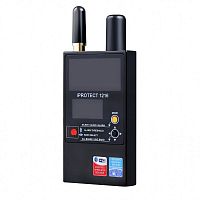


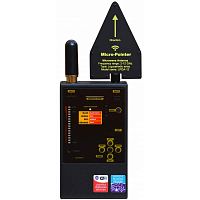
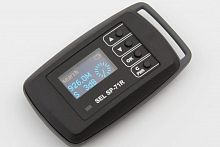


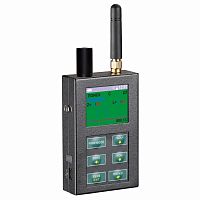

We will answer the most frequent customer questions that arise when choosing field indicators:
-
How to choose the right field indicator for searching for listening devices for your tasks?
-
What tasks does the field indicator solve in the process of searching for listening devices, and which ones do not?
-
Which listening devices can be detected by modern field indicators, and which are not?
-
What is the difference between household field indicators and professional ones? brands of household and professional devices, pros and cons, due to which professional field indicators are more expensive?
-
Is it legal to use the tools to search for listening devices without an appropriate license?
The rapid development of means of communication and communication, the availability of the Internet in almost every family has led not only to positive, but also to negative results. Often on the Internet there are materials related to information in respect of which the owner has established a requirement to ensure its confidentiality, that is, the information that he wanted to keep secret from other persons. Obtaining such information, as a rule, is associated with a violation of the law and the use of special, technical means (STS) to secretly obtain information. Leakage of confidential information, in turn, can lead to financial, moral losses, loss of business reputation of its rightful owner, in addition, it can become the object of banal blackmail.
Radio microphones, or "bugs", as they are colloquially called, have found the most widespread use for illegal obtaining of information. Despite the illegality of the use of such tools, their availability (offers on the Internet, the possibility of purchasing on the radio markets, the relative ease of manufacture) and ease of use brought this type of STS to one of the first places in terms of frequency of use.
Our legislation allows the owners of information independently, using search equipment, without obtaining a license to identify such STS to ensure their own information security. Thus, in the Federal Law" On Licensing of certain Types of Activities " No. 99-FZ of 04.05.20011, in Article 12, which defines the list of types of activities for which licenses are required, in paragraph 3 says that in accordance with this Federal law subject to licensing "working towards the identification of electronic devices is intended for secret information (except if the activity is carried out for own needs of a legal entity or individual entrepreneur)".
In the light of the above, the task of correctly selecting the necessary equipment for detecting this kind of STS becomes highly relevant. Since most buyers are poorly versed in the technical aspects of search activities, they have to be guided by the most accessible reference materials on these issues, that is, information obtained from the Internet. At the same time, their desire to ensure the maximum level of information security at the lowest cost seems quite reasonable. However, most customers forget the well-known proverbs that a miser pays twice, and free cheese is only in a mousetrap. This is often used by unscrupulous manufacturers and sellers of search equipment. We can not say that they directly deceive the buyer, rather, they simply do not say something. As a rule, when considering the capabilities of a particular device, its most favorable characteristics are put forward to the fore, while the rest, less attractive, are hushed up. Recently, a number of articles have appeared in the media, in which field indicators are positioned almost as a "panacea" for protection from radio microphones, so there was a need to find out whether such statements correspond to reality or this is another advertising move. First of all, we will try to understand what an indicator or detector of an electromagnetic field is and on what physical principles it works. An elementary field indicator is a meter of the electromagnetic field in the near zone, that is, in the area of a controlled or, in accordance with the terminology of special requirements and recommendations for the technical protection of confidential information (PAGE-K), protected premises.
The simplest field indicator consists of an antenna, a broadband amplifier, a threshold device, and an indication device for the detected signal. The operating frequency range of such an indicator is determined by the bandwidth of the broadband amplifier, and the bandwidth of the field indicator is usually several gigahertz. Since most field indicators do not have input signal selection circuits, they are not able to scan the frequency range and respond to the appearance of electromagnetic signals exceeding the threshold value almost instantly, regardless of the transmission frequency. Recently, the market has introduced selective IP, working on the principle of a scanning receiver, but with a wider viewing band. Due to the wide bandwidth, the sensitivity of the field indicator does not exceed 10 mV, and therefore the detection range of electromagnetic radiation exceeding the threshold value is low and in practice is units of meters ("near zone"), and also strongly depends on the operating frequency and power of the radiation source.
Thus, the magnetic field indicator registers electromagnetic radiation at the monitoring site that exceeds the threshold values and, in accordance with the criteria laid down in the control circuit of the device, outputs data on the detected signals to the display device.
For a better understanding of the principles implemented in the field indicators when detecting the signals of active bookmark devices (memory), it is advisable to analyze the structure of electromagnetic radiation in protected areas.
The electromagnetic environment of almost any room is characterized by many components. It includes, first of all, the radiation of legal sources, which can include VHF radio stations, cellular and trunking communication systems, television, radiotelephones, working household electronic equipment, etc.The totality of these emissions is the electromagnetic background of the room, which determines the level of the threshold value for most field indicators. The background values of electromagnetic radiation will be approximately the same for the premises adjacent to the test object.
When an active listening device is introduced into a room, its radiation in most cases will differ sharply from the background in power, amplitude, and significantly exceed the threshold value. If the threshold value is set correctly, the field indicators will detect the radiation of the listening device and display the signal parameters to the display device, according to which the operator will be able to decide whether the detected radiation source belongs to the listening devices. Therefore, the information displayed on the display device plays an important role in determining whether the detected radiation belongs to the listening devices. Therefore, there is a need to understand in more detail the technical characteristics and features of the functioning of various types of field indicators.
Depending on the tasks solved with the help of electromagnetic field indicators, you can classify them, conditionally dividing them into household and professional ones.
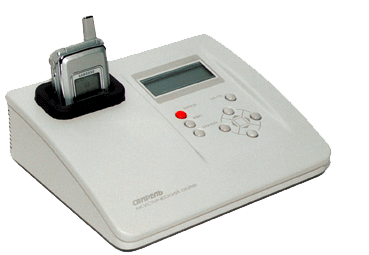
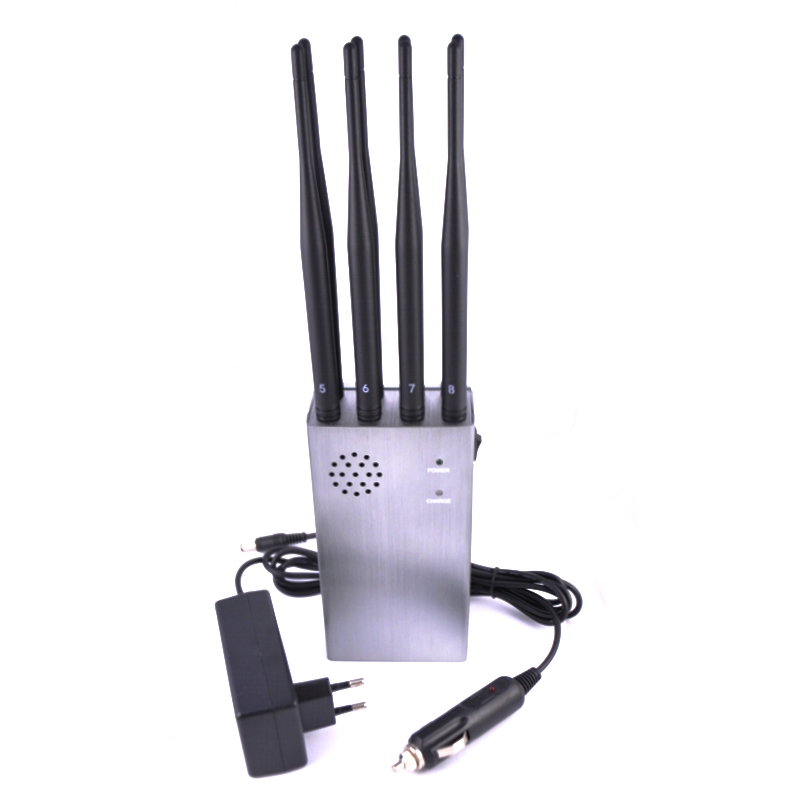
Household indicators of the electromagnetic field. As a rule, the only function of such devices is to turn on the display when the level of the electromagnetic field exceeds a certain previously set value (threshold). The indication of such devices basically makes sense-Yes/No. These indicators are intended to inform the owner of the presence (appearance) during negotiations or at the location of the owner of the indicator field of unauthorized radiation exceeding the background value of radiation in this place. As a rule, these devices have small overall dimensions, a hidden indication. For the most part, they are disguised as frequently used household appliances and various kinds of souvenirs: key rings, remote controls for turning on car alarms, fountain pens ("Sputnik", "Komar", Antibug+, "Notepad", "Hunter pen detector", etc.).
Professional indicators of the electromagnetic field. The main purpose of professional field indicators is to identify and locate unauthorized radiation sources. They have a more complex block diagram that includes a number of additional devices.
Since the efficiency of the field indicators strongly depends on the interference situation in a particular search location, some models of field indicators use notch or bandpass filters (APP-7) to reduce this dependence. The former largely reduce the level of interference from known sources (usually TV transmitters) and are tuned to the most powerful of them. The latter narrow the frequency range of the search, which reduces the power of interference at the input of the device. Usually, several bandpass filters are used, each of which is configured for a different frequency range. Together, they overlap the frequency range of the field indicator. When searching for bugs, depending on the load of the checked range, filters can be used selectively.
The presence of counter mode allows you to measure the carrier frequency of the radio signal, which is much higher than the background level. This makes it possible to roughly identify the transmitter by the value of the carrier frequency and determine what type of signal can be attributed to the detected signal. The frequency meter mode is very useful when the value of the carrier frequency of the bookmark devices is known and the task of the final localization of the dangerous signal transmitter is faced.
For example, when using automated radio monitoring systems, when the search and identification can be carried out automatically. In this case, the carrier frequency of the bookmark device will be determined by the complex, and localization is more convenient to carry out with the help of field indicators that have a frequency meter mode.
We have tried to briefly cover all aspects of the problem raised, which is currently becoming more and more relevant. The organization and implementation of search activities in modern conditions also require a rethink and the development of a new approach.